Full-spectrum maintenance
digital-checklist inspection and patrolling, calendar- and counter-based preventive scheduling, and predictive maintenance from IoT telemetry and AI/ML forecasting


Enterprise Asset Lifecycle
Operations Management is the execution layer of ETIOT's Enterprise Asset Lifecycle Management platform — field and control-room operations performed against assets that the Asset Management layer governs. It is not a standalone product: it shares the asset registry, user directory and audit trail with AM, and it consumes rather than authors asset master data.
Product Overview
Operations Management is the execution layer of ETIOT's Enterprise Asset Lifecycle Management platform — field and control-room operations performed against assets that the Asset Management layer governs. It is not a standalone product: it shares the asset registry, user directory and audit trail with AM, and it consumes rather than authors asset master data.
A work-order app that owns its own copy of asset data drifts out of sync with reality the moment it goes live. Crews work on stale information, closures don't update the asset's true status, and safety incidents sit in a system separate from the maintenance they should trigger. And when the network drops in a basement, a tunnel or a remote site — exactly where the work happens — the whole thing stops.
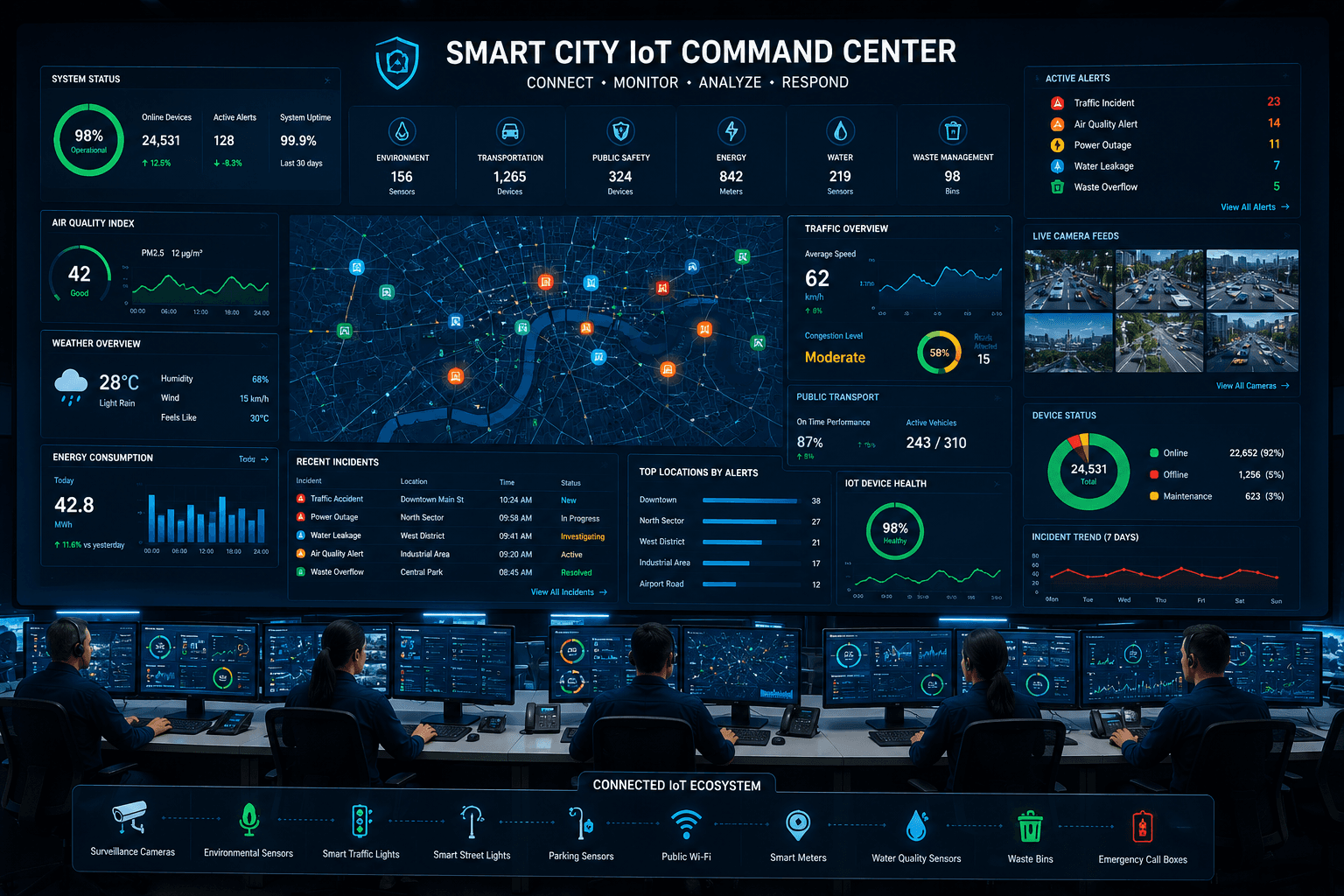
OM solves this by executing against AM's governed data. Field teams run digital-checklist inspections and patrols; preventive maintenance is scheduled on calendar and counter triggers; predictive maintenance draws on IoT telemetry and AI/ML failure forecasting. HSSE management covers permits, incident reports, toolbox talks and safety audits — and work orders are raised directly from HSSE incidents. Work-order execution drives automatic asset status transitions, with closure requiring return-to-service confirmation. A control-room dashboard, Digital Twin live-state feed and GIS visualisation give the operations centre a live picture, while fleet management adds vehicle tracking and driver-behaviour scoring.
Its field performance contract is explicit: sub-2-second mobile response, offline continuity, and degraded-mode operation with cached data and queued sync when the governance layer is unreachable. Ten verticals ship pre-configured.
Key Features
digital-checklist inspection and patrolling, calendar- and counter-based preventive scheduling, and predictive maintenance from IoT telemetry and AI/ML forecasting
work permits, incident reports, toolbox talks and safety audits, with work orders raised directly from HSSE incidents
execution drives automatic asset status transitions; closure requires return-to-service confirmation
control-room dashboard, Digital Twin live-state feed and GIS visualisation, plus operational loss and gain calculation
vehicle tracking and driver-behaviour scoring
sub-2-second mobile response, offline continuity, and degraded-mode operation when the governance layer is unreachable
How It Works
OM pulls authoritative asset master data from AM; it never edits the register itself.
preventive schedules trigger on calendar or counter rules; predictive models flag assets before they fail.
technicians run digital checklists on a mobile-first app, working offline where needed.
HSSE incidents automatically raise the corresponding work orders.
completing a work order moves the asset's status; closure requires return-to-service confirmation.
the control room watches live telemetry, Digital Twin state and GIS, with degraded-mode fallback if the governance layer drops.
FAQ
No. It is the execution layer of the Enterprise Asset Lifecycle platform and works against assets governed by Asset Management, sharing the registry, user directory and audit trail.
No. OM consumes asset master data; it never authors it. Governance of the record stays in AM.
OM offers offline continuity and degraded-mode operation with cached data and queued sync, so field work continues even if the governance layer is temporarily unreachable.
HSSE incidents generate work orders directly, so a reported hazard flows straight into scheduled corrective action.
Work-order execution drives automatic asset status transitions, and closure requires return-to-service confirmation before an asset clears.
Preventive (calendar- and counter-based) and predictive (IoT telemetry with AI/ML failure forecasting), alongside inspection and patrolling.
Healthcare, airports, telecom, manufacturing, railways & metro, smart cities, power distribution, water utilities, mining and facility management.
The field performance contract targets sub-2-second mobile response with offline continuity.
Its field performance contract is explicit: sub-2-second mobile response, offline continuity, and degraded-mode operation with cached data and queued sync when the governance layer is unreachable. Ten verticals ship pre-configured.